
Play with a Purpose: Strategic Games Support Wellness
Updated: Jul 22
When most people think about “healthy habits,” they picture food and exercise. But what you do with your mind—and with whom you spend time—matters just as much. Game night is more than just passing the time. Strategic games challenge your brain, encourage planning and problem‑solving, and create shared moments with other people —a real wellness boost.

Give Your Brain a Boost
Classic strategy games like chess, Go, mahjong, and bridge ask us to plan ahead, solve problems, remember patterns, and read other people. Studies suggest that this kind of mental and social workout can support thinking skills, help protect brain health as we age, and make us feel more connected and less lonely.
Chess: A Classic Workout for Planning and Problem‑Solving
Chess is one of the most studied strategy games out there. Think of it as a gym session for your “mental CEO”—the part of your brain that plans, focuses, and makes decisions.
I learned to play chess when I was young and later taught my children. We’ve played plenty of games of chess at home, but our favorite memories are from playing together at Oberweis Dairy Stores in the Midwest and at tables set up in local parks.
In schools, children who take part in chess programs often do better with problem‑solving and planning, and sometimes even show higher scores in math and reading than children who don’t play chess (1,2). A meta-analysis (large review of many chess studies) found that structured chess lessons are linked to small‑to‑ moderate gains in thinking skills and school performance (1). It’s not a magic trick, but it’s a real, helpful boost when added to other good learning habits. Chess players also tend to do better on tasks that measure planning and working memory, compared with people who don’t play (4). Regularly thinking several moves ahead and adjusting to an opponent’s strategy seems to strengthen those core “executive” skills.
Go: Deep Focus and Pattern Recognition
Go is another ancient strategy game, and it asks a lot of your brain too. You’re constantly planning far ahead, spotting patterns, and staying flexible as the board changes. Neuroimaging studies of expert Go players found that serial decision-making in competitive environments show differences in brain activity patterns (5).
There’s less research on Go than on chess but Go uses many of the same mental muscles. You track complex patterns on the board, hold different possibilities in mind, and shift your plan as new stones are played. Studies that look at strategy games more broadly (including chess and complex strategy video games) show that this kind of sustained, pattern‑based thinking is linked to better attention, working memory, and task switching (3-4, 6). Those are exactly the skills Go players use when they scan the board, anticipate threats, and balance local fights with the overall position.
Mahjong: Memory, Speed, and Social Play
Mahjong is a tile‑based game that mixes memory, quick pattern recognition, and social interaction.
My two sisters recently taught me Mahjong while we were on vacation together – I am hooked! Since we live at a distance from each other, I am researching locations for games in my area (I’ll meet new people!) and possibly live online multiplayer platforms to play together with family.
In a large Chinese cohort, older adults who played mahjong regularly had better cognitive performance and a lower risk of cognitive impairment (7). Many other large studies don’t single out mahjong by name, but they do look at “board and card games” or “cognitively stimulating leisure activities” as a group. Regularly playing these kinds of games has been linked to a lower risk of cognitive decline and dementia (8,9). In a large French study that followed people for 20 years, older adults who regularly played board games had a reduced risk of dementia, even after researchers adjusted for baseline thinking skills and lifestyle factors (8). Mahjong fits this picture well. Players have to remember tiles, track what others have discarded, and make quick decisions—all while chatting and socializing. That mix of mental challenge and social engagement lines up with what we know supports “cognitive reserve” and healthy aging (8,9).
Bridge: Strategy, Memory, and Teamwork
Bridge is a partnership card game that blends strategy, memory, and communication. You need to remember which cards have been played, guess what your partner and opponents likely hold, and coordinate bids and plays as a team, which may help preserve thinking skills and mental flexibility later in life (10,11). Studies of older adults who play bridge regularly show better performance on working memory, reasoning, and processing speed tasks compared with nonplayers, even after adjusting for education and baseline cognitive status (10).
Like mahjong, bridge usually shows up in research as part of the broader category of board and card games (8,9). Regular participation in these games has been linked to a lower risk of dementia and slower cognitive decline in older adults (8,9). Bridge also naturally builds in social interaction and cooperation, which are important for emotional well‑being and social health (12-14). For many older adults, bridge clubs offer structure, routine, and a sense of belonging, which studies link to less loneliness and fewer depressive symptoms (13,14). My 89‑year‑old mom still gets together regularly with her friends to play bridge.
 | Chess | Chess is a classic two player battle of the mind. Every turn asks you to weigh risks, protect your king, and look several moves ahead. Regular chess helps build patience and strategic thinking. It offers one-on-one time that feels competitive, playful and mentally rich. The magnetic versions are good for travel. | |
 | Mahjong | American Mahjong is a tile-based strategy game usually played by four people. Players draw and discard tiles trying to build wining sets before anyone else does. Mahjong trains memory, pattern recognition, and quick decision-making. It is both mentally engaging and can be very social between turns. | |
 | Go | Go is an ancient East Asian strategy game in which two players take turns placing black and white stones on the board, aiming to surround more open territory than their opponent. The game Go trains patience, long-term planning, and pattern recognition. Some magnetic versions have folding game boards for travel. | |
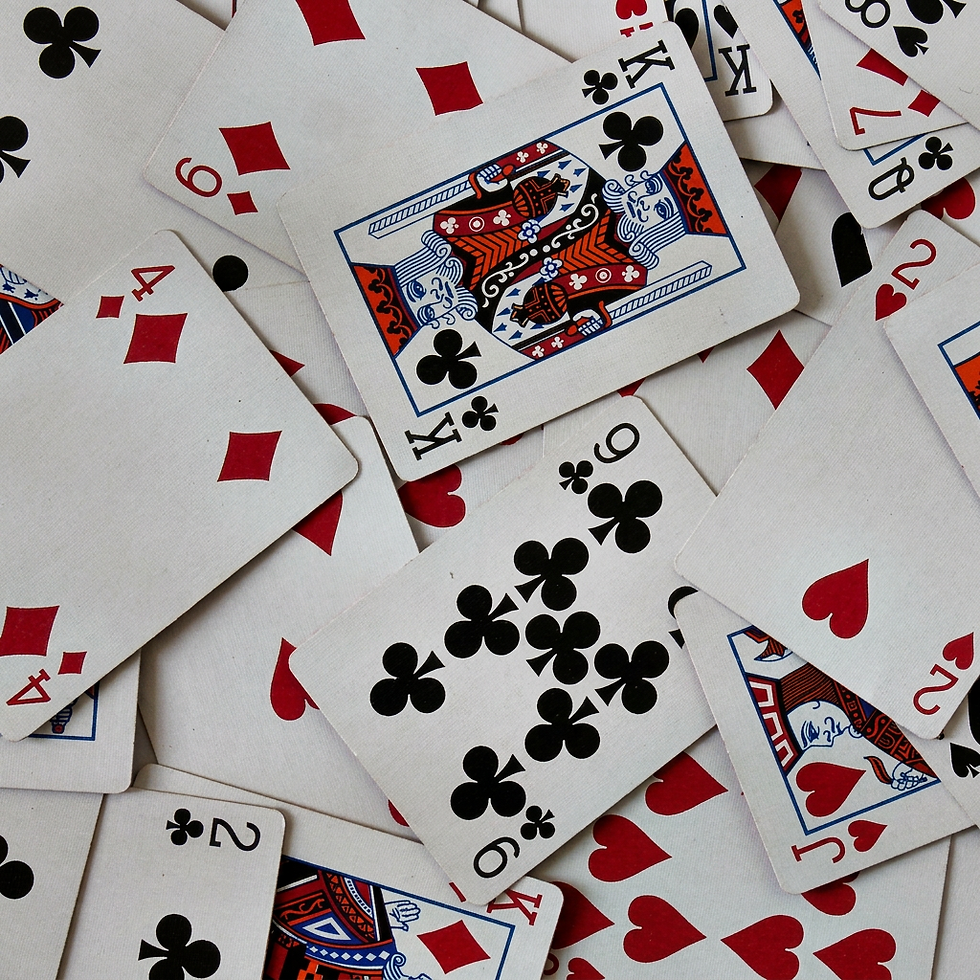 | Bridge | Bridge is a strategic card game for four players in two partnerships using a standard 52-card deck. Bridge rewards communication, memory and careful planning. It supports social connection, keeps the mind sharp, and offers a fun, long-term challenge for friends and family. |
What About Other Games?
Modern strategy and word games—like Catan, Risk, Checkers, and Codenames—share many of the same features researchers talk about when they study strategy and board/card games: planning, pattern recognition, flexible thinking, teamwork, and word retrieval.
Most research looks at “strategy games” or “board and card games” as broad groups rather than testing these specific titles. But it’s reasonable to think that strategic games with similar mental and social demands may tap into many of the same brain and relationship benefits.
Choosing Appropriate Strategic Games
Evidence suggests that games with the following features may be especially beneficial for cognitive and social wellness:
Require planning, strategy, and adaptation (e.g., chess, Go, complex board games, bridge, turn-based strategy video games).
Encourage interaction and discussion (cooperative or team-based games).
Offer adjustable difficulty to maintain challenge without excessive frustration.
Frequency and Duration of Playing Strategic Games
There is no single “dose” of gaming established, but observational studies often define “regular” participation as at least weekly engagement in games or similar cognitive leisure activities (8,9,13). For many, aiming for 1 to 3 sessions per week of 30 to 90 minutes of strategic game play, alone or with others, is a practical starting point. Shorter, more frequent sessions may be easier to sustain and can still provide meaningful cognitive and social stimulation.
Consistency may be more important than intensity. Integrating games into existing routines—such as a weekly family game night, a standing meet-up with friends, or a regular club at a community center—can help maintain engagement over time.
You don’t need to turn game night into homework. Pick games you enjoy, play regularly, keep it friendly, and notice how you feel—more focused and more connected.
That’s wellness, one tile, trick, or move at a time.
References
1. Sala G, Gobet F. Do the benefits of chess instruction transfer to academic and cognitive skills? A meta-analysis. Educ Res Rev. 2016;18:46-57. doi:10.1016/j.edurev.2016.02.002
2. Burgoyne AP, Sala G, Gobet F, Macnamara BN, Campitelli G, Hambrick DZ. The relationship between cognitive ability and chess skill: a comprehensive meta-analysis. Intelligence. 2016;59:72-83. doi:10.1016/j.intell.2016.08.002
3. Basak C, Boot WR, Voss MW, Kramer AF. Can training in a real-time strategy video game attenuate cognitive decline in older adults? Psychol Aging. 2008;23(4):765-777. doi:10.1037/a0013494
4. Unterrainer JM, Kaller CP, Leonhart R, Rahm B, Halsband U. Planning abilities and chess: a comparison of chess and non-chess players on the Tower of London task. Br J Psychol. 2006;97(pt 3):299-311. doi:10.1348/000712605X71407
5. Chen C, Xue G, Mei L, et al. Neural correlates of serial decision-making in a competitive game. PLoS One. 2013;8(3):e59324. doi:10.1371/journal.pone.0059324
6. Anguera JA, Boccanfuso J, Rintoul JL, et al. Video game training enhances cognitive control in older adults. Nature. 2013;501(7465):97-101. doi:10.1038/nature12486
7. Zhang Z, Zhang J. Leisure participation and subjective well-being: exploring gender differences in urban China. J Happiness Stud. 2015;16(2):455-474. doi:10.1007/s10902-014-9513-5
8. Akbaraly TN, Portet F, Fustinoni S, et al. Leisure activities and the risk of dementia in the elderly: results from the Three-City Study. Neurology. 2009;73(11):854-861. doi:10.1212/WNL.0b013e3181b7849b
9. Scarmeas N, Levy G, Tang MX, Manly J, Stern Y. Influence of leisure activity on the incidence of Alzheimer’s disease. Neurology. 2001;57(12):2236-2242. doi:10.1212/WNL.57.12.2236
10. Mahncke HW, Bronstone A, Merzenich MM. Brain plasticity and functional losses in the aged: scientific bases for a novel intervention. Prog Brain Res. 2006;157:81-109. doi:10.1016/S0079-6123(06)57006-2
11. Parisi JM, Rebok GW, Seeman TE, et al. Lifestyle activities in sociodemographically at-risk urban older adults prior to participation in the Baltimore Experience Corps® Trial. Act Adapt Aging. 2012;36(3):242-260. doi:10.1080/01924788.2012.702307
12. Holt-Lunstad J, Smith TB, Baker M, Harris T, Stephenson D. Loneliness and social isolation as risk factors for mortality: a meta-analytic review. Perspect Psychol Sci. 2015;10(2):227-237. doi:10.1177/1745691614568352
13. Park NS, Jang Y, Lee BS, Chiriboga DA. The relation between living alone and depressive symptoms in older Korean Americans: do feelings of loneliness mediate? Aging Ment Health. 2017;21(3):304-312. doi:10.1080/13607863.2015.1099035
14. Choi M, Kong S, Jung D. Computer and internet interventions for loneliness and depression in older adults: a meta-analysis. Healthc Inform Res. 2012;18(3):191-201. doi:10.4258/hir.2012.18.3.191
Healthtidbits4U is a participant in the Amazon Services LLC Associates Program, an affiliate advertising program designed to provide a means for sites to earn advertising fees by advertising and linking to Amazon.com. As an Amazon Associate, we earn from qualifying purchases. This means that if you click on a link and make a purchase, we may receive a small commission at no extra cost to you. We only recommend resources, tools, and gear that we believe provide genuine value to our readers' wellness journeys.
Feel free to email me feedback using the link in the page footer.
